

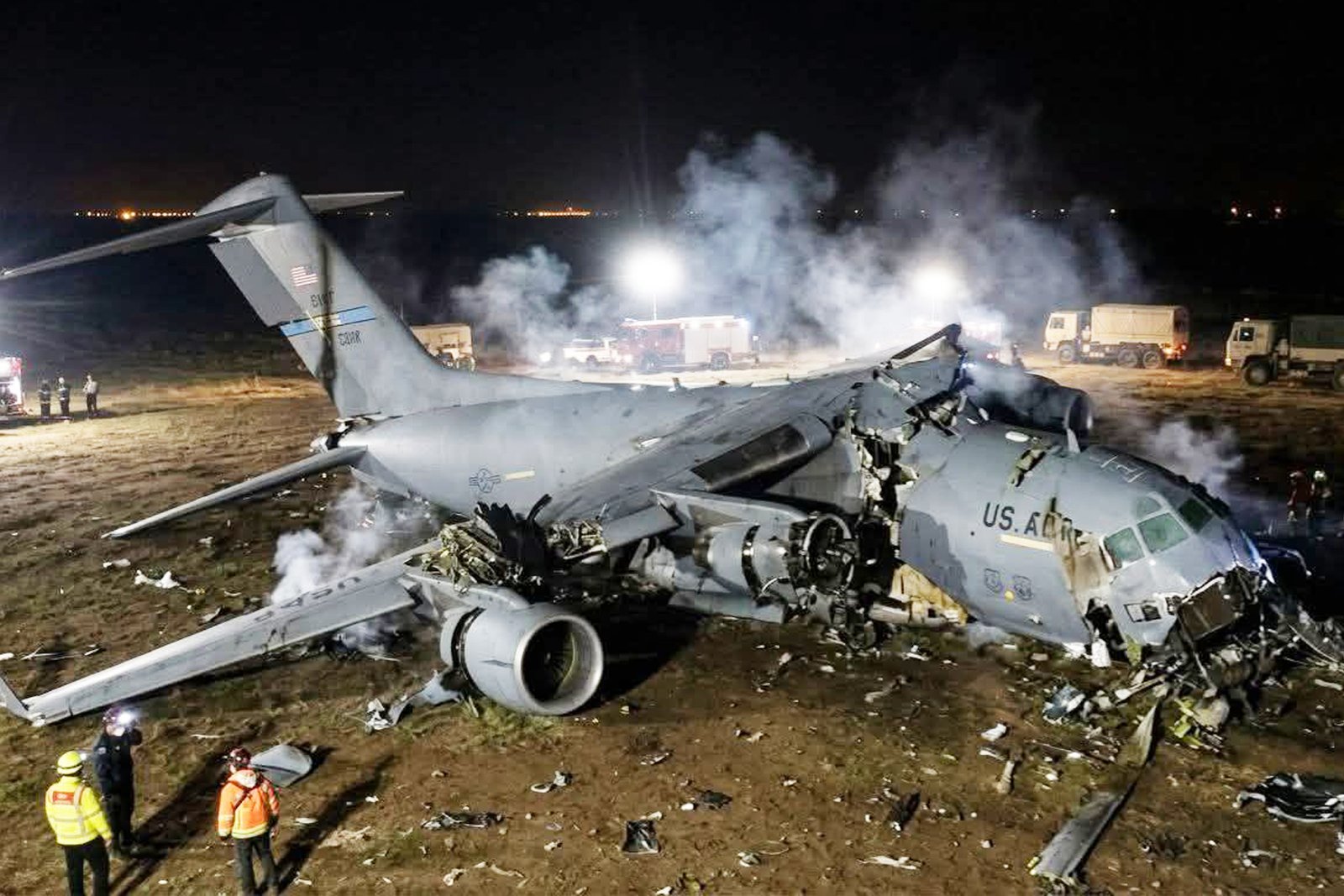
Four of the six crew members on a US military KC-135 refueling plane that crashed in western Iraq were killed, the US military said. Rescue teams are still searching for the remaining two. The military confirmed that the crash involved another aircraft but was not caused by enemy attacks or friendly fire. The incident highlights the dangers faced by service members in remote and conflict-prone areas.
Western Iraq is mostly desert with rocky plains. It is sparsely populated but home to bases of Iran-aligned Shia militias. The region has also seen repeated US and Israeli airstrikes in recent years. These conditions make rescue operations challenging, especially in harsh terrain where accidents can quickly become dangerous.
Elsewhere in Iraq, a French soldier was killed in the autonomous Kurdistan region, French President Emmanuel Macron confirmed. This is the first French military death in the ongoing conflict. Pro-Iranian groups have also warned that French interests in Iraq could be targeted, especially after the arrival of a French aircraft carrier.
Since the joint US-Israeli operations against Iran began nearly two weeks ago, the Middle East has seen an increase in attacks by pro-Iranian factions. These groups have targeted foreign military bases and personnel, raising risks for troops in the region. The US has deployed a large number of aircraft and specialized search-and-rescue teams to handle incidents like the KC-135 crash.
US Central Command said the second aircraft involved in the incident landed safely. The crash happened in friendly airspace during Operation Epic Fury, the US mission targeting Iran. This is the fourth US aircraft lost since the US and Israel began strikes on Iran on February 28. Earlier, three US Air Force F-15E fighter jets were mistakenly shot down by Kuwait air defenses, though all crew members survived.
So far, eleven US troops have died in the conflict, and as many as 150 have been wounded. Iran reports more than 1,300 deaths. Former President Donald Trump and Defense Secretary Pete Hegseth have said more American lives may be lost before the conflict ends. These numbers show the human cost and the ongoing dangers faced by military personnel in the region.
Earlier, six US service members died when an Iranian drone struck an operations center at a civilian port in Kuwait. These troops worked in logistics, supplying frontline forces with food and equipment. A seventh US service member died after being wounded in an attack on the Prince Sultan Airbase in Saudi Arabia on March 1. These incidents demonstrate that military support roles are also at risk.
Iran’s new supreme leader, Mojtaba Khamenei, vowed to avenge Iranian casualties in the conflict. State media reported that he was wounded in an Israeli strike at the start of the war, and some family members were killed. US and Israeli airstrikes have also hit Tehran, shaking homes and raising tensions further in the country.
Israel continues to face missile attacks from Iran. Two people were reported injured in northern Israel during a barrage overnight. Israel has also carried out airstrikes in Beirut, Lebanon, warning that it may expand operations if Hezbollah does not stop attacks.
Hundreds have been killed, and nearly a million people have been displaced due to the fighting. The KC-135 crash is a reminder of the risks faced by military personnel during operations in conflict zones. Rescue teams continue to work under difficult conditions, and authorities are closely monitoring the situation.
With ongoing airstrikes, missile attacks, and tensions across multiple countries, the conflict in the Middle East remains highly volatile.